Projected capacitive touch, also known as PCAP or PCT technology, is one of the most widely used touch sensing technologies in modern electronic devices. It enables accurate, responsive, and intuitive interaction through a touch-sensitive surface, making it suitable for smartphones, tablets, industrial control systems, medical equipment, and self-service terminals.
For manufacturers and equipment designers, projected capacitive touch technology offers flexible integration options, multi-touch functionality, and durable touch panel designs. Understanding how it works and what to consider when selecting a projected Capacitive Touch Screen can help businesses choose the right solution for their applications.
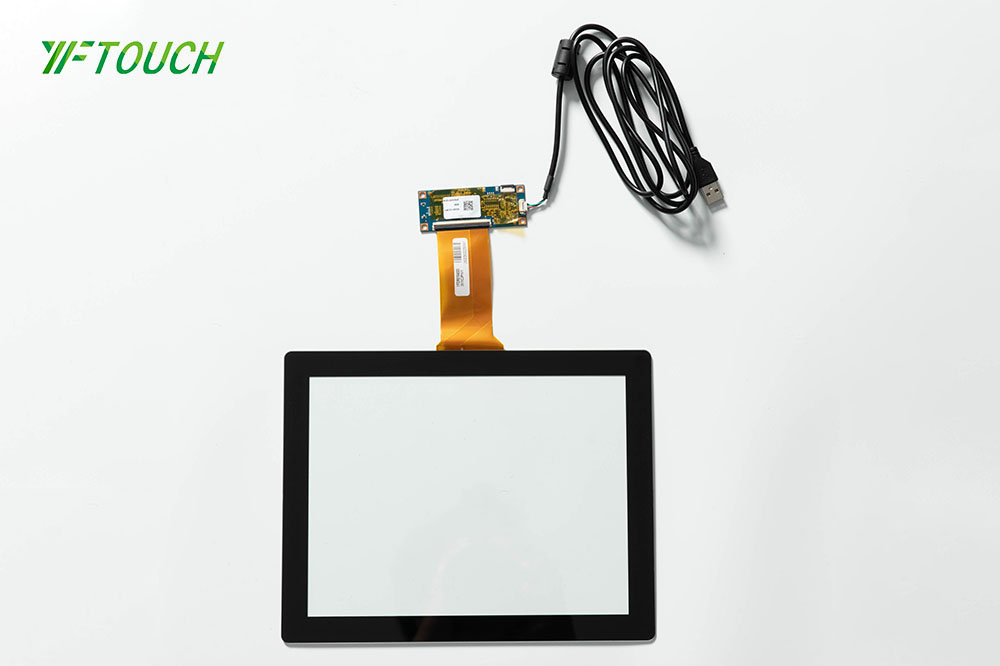
What Is Projected Capacitive Touch?
Projected capacitive touch is a touch sensing technology that detects changes in capacitance when a conductive object, such as a finger, approaches or touches the screen surface.
Unlike resistive touch technology, which detects pressure between conductive layers, a Projected Capacitive Touch Panel uses a grid of transparent sensing electrodes to detect changes in an electrical field. A touch controller processes these changes to determine the position of one or more touch points.
A typical Projected Capacitive Touch Screen consists of a protective cover glass, a capacitive sensor layer, a touch controller, and associated electronic components. Depending on the product design, these components can be integrated with an LCD or other display technologies to create a complete touch display solution.
Projected capacitive touch technology is widely used because it combines responsive operation with a smooth glass surface and support for multi-touch gestures.
How Does Projected Capacitive Touch Technology Work?
Understanding the working principle of projected capacitive touch technology helps explain why it is suitable for a wide range of interactive devices.
1. Capacitive Sensor Grid
The touch panel contains a network of transparent conductive electrodes arranged in a sensing pattern. These electrodes establish an electrical field across the touch surface and continuously monitor capacitance.
2. Capacitance Changes During Touch
When a finger touches or approaches the surface, it changes the local electrical field and capacitance. The sensor detects this variation and generates signals corresponding to the touch location.
3. Touch Controller Processing
The touch controller analyzes the signals received from the sensor electrodes. It calculates the coordinates of the touch point and sends the information to the connected device's operating system or control system.
4. Multi-Touch Recognition
A projected capacitive touch screen can typically detect multiple touch points simultaneously. This allows users to perform gestures such as pinching, zooming, rotating, and scrolling, depending on the controller and software configuration.
Key Benefits of a Projected Capacitive Touch Screen
Projected capacitive touch screens offer several advantages for consumer electronics, commercial equipment, and industrial applications.
Accurate and Responsive Touch Performance
A Pcap Touch Screen can provide precise touch detection and fast response when properly designed and calibrated. This makes it suitable for interactive displays, control panels, and applications that require accurate on-screen operation.
Multi-Touch Capability
Multi-touch support allows users to interact with several points on the screen simultaneously. This feature is particularly useful for tablets, interactive terminals, digital signage, and modern human-machine interfaces.
Durable Glass Surface
Many projected capacitive touch panels use a glass cover that provides a smooth, easy-to-clean surface. The cover glass can be selected or customized according to application requirements, including thickness, surface treatment, and shape.
Actual durability depends on the glass specification, bonding structure, and overall product construction.
Flexible Design and Integration
Projected capacitive touch technology supports a variety of screen sizes, sensor configurations, cover glass designs, and interface options. It can be integrated into compact consumer devices or larger industrial displays.
Manufacturers can select suitable sensor and controller configurations based on the required touch performance, display structure, and operating environment.
Potential for Glove Operation
Certain projected capacitive touch screens can support operation with compatible gloves. However, glove performance depends on the glove material and thickness, sensor design, controller sensitivity, and tuning parameters. Applications requiring reliable glove operation should be tested under actual working conditions.
Applications of Projected Capacitive Touch Panels
Projected capacitive touch panels are used across industries where reliable and intuitive human-machine interaction is important.
Industrial Control Systems
An industrial projected capacitive touch screen can be integrated into human-machine interfaces, automation equipment, machine control panels, and production monitoring systems.
For industrial environments, buyers should evaluate operating temperature, electromagnetic compatibility, vibration resistance, moisture exposure, and the need for glove operation.
Medical Equipment
Projected capacitive touch panels are used in compatible medical instruments, diagnostic equipment, patient monitoring systems, and other electronic devices. Their smooth surfaces can simplify routine cleaning, while the final design must meet the hygiene and regulatory requirements of the intended application.
Self-Service Kiosks and POS Terminals
Self-service kiosks, payment terminals, and point-of-sale systems use PCAP touch screens to support intuitive menus, transaction input, and interactive customer services.
Screen durability, touch accuracy, and compatibility with the device's display and software are important selection factors.
Consumer Electronics
Smartphones, tablets, portable electronics, and smart home devices commonly use projected capacitive touch technology. Its multi-touch capabilities and responsive interface support modern user experiences.
Automotive Displays
Projected capacitive touch panels can be used in automotive infotainment systems, center consoles, and other in-vehicle interfaces. Automotive applications may require additional validation for temperature variation, vibration, electrical interference, and long-term reliability.
How to Choose the Right Projected Capacitive Touch Screen
Selecting a suitable projected capacitive touch screen requires evaluating both technical specifications and the conditions in which the product will operate.
Screen Size and Shape
Choose a screen size that matches the equipment design and user interface. Depending on the manufacturer, custom dimensions, cover glass shapes, and sensor layouts may be available.
Cover Glass and Surface Treatment
Cover glass thickness, material, surface finish, and strength affect durability, appearance, and touch performance. Anti-glare, anti-fingerprint, and other treatments may be considered according to the intended environment.
Touch Points and Controller
Confirm the required number of simultaneous touch points and the compatibility of the touch controller with the operating system, interface, and display module.
Operating Environment
Consider temperature, humidity, water exposure, dust, electromagnetic interference, and glove requirements. For industrial use, request relevant test data and verify that the proposed configuration meets the actual environmental requirements.
Interface and Integration
Check the available connection interface, controller communication protocol, display compatibility, mounting structure, and mechanical dimensions before integration.
Customization and Manufacturing Support
For OEM projects, ask whether the manufacturer can support custom cover glass, sensor dimensions, controller configuration, interface options, and other project-specific requirements. Clear technical communication can help reduce integration issues during product development.
Why Choose a Professional Projected Capacitive Touch Panel Supplier?
Working with an experienced projected capacitive touch panel supplier can help businesses identify suitable components and develop touch solutions for specific equipment requirements.
When evaluating a supplier, consider the following factors:
Technical expertise: The supplier should understand sensor design, controller configuration, and touch performance optimization.
Product customization: Check the availability of custom sizes, cover glass, sensor structures, and integration options.
Quality control: Ask about touch performance testing, environmental validation, and production inspection procedures.
Product consistency: Reliable manufacturing processes help maintain consistent performance across production batches.
Technical support: Access to documentation and integration assistance can simplify product development and troubleshooting.
For equipment manufacturers, selecting a supplier that can support both standard products and customized touch panel projects can make the development process more efficient.
Find the Right Projected Capacitive Touch Solution
Projected capacitive touch technology provides responsive operation, multi-touch capability, and flexible integration options for modern electronic devices. From consumer electronics and self-service kiosks to industrial control systems and medical equipment, a properly specified PCAP touch screen can support intuitive interaction and reliable equipment operation.
When selecting a projected capacitive touch screen or panel, consider the screen dimensions, cover glass, touch controller, operating environment, interface, and customization requirements.
Contact our team to discuss your application and explore projected capacitive touch solutions tailored to your product design and technical specifications.